
By Potomac-Chesapeake Dolphin Project Director Dr. Janet Mann
On October 21, 1972, President Nixon signed the Marine Mammal Protection Act. Little did he know that bottlenose dolphins were swimming less than a mile from his doorstep in the capital’s abutting river – a century earlier.
Research by Dr. Ann-Marie Jacoby shows that dolphins have frequented the upper tidal Potomac River since the 1800s, even traveling as far as Washington DC. By the 1930s, however, dolphins no longer made their seasonal pilgrimage to the upper reaches of the river, instead remaining down-river. To this day, most residents along the upper Potomac River do not know about its down-river inhabitants.
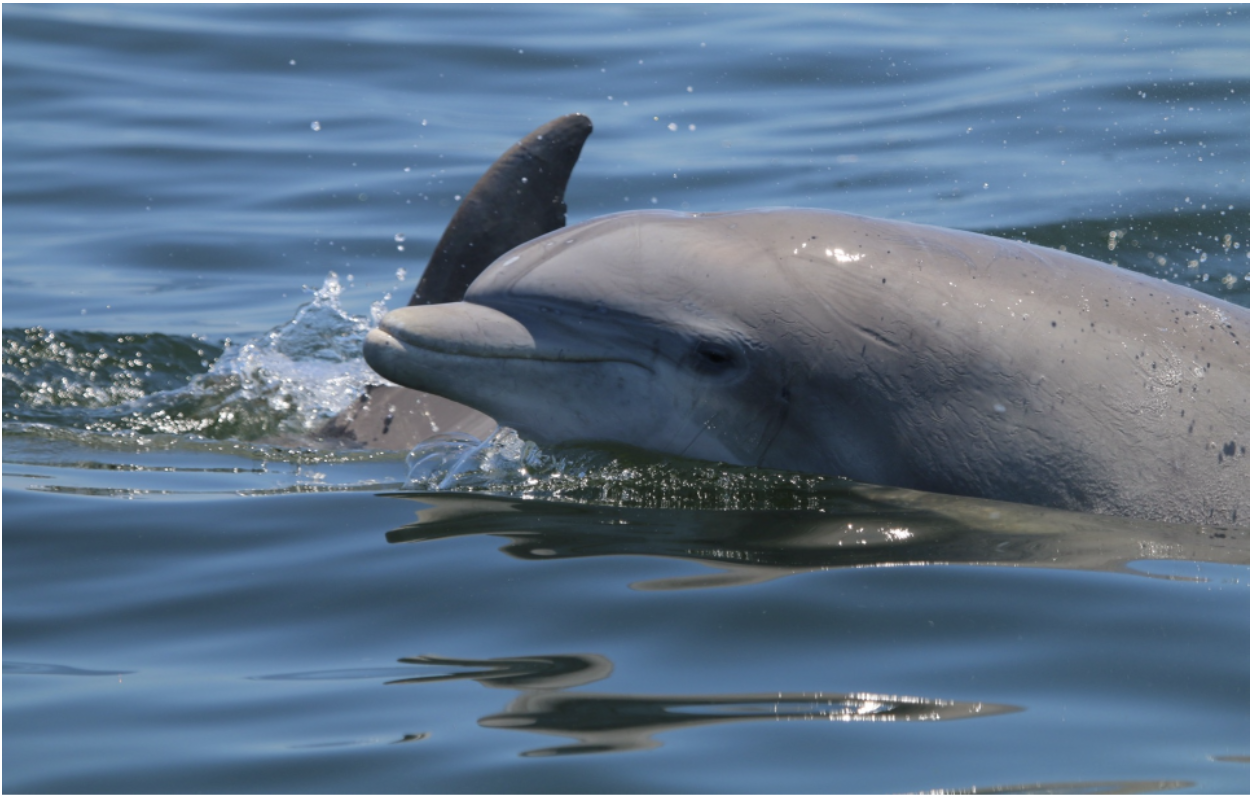
Image of Tamanend’s bottlenose dolphin in the Potomac River. Potomac-Chesapeake Dolphin Project. NMFS GA 19403
I, too, was genuinely surprised to find dolphins in the Potomac River, even though I have studied dolphins for decades in Australia. Of course, those living near the lower Potomac have seen dolphins periodically for generations. Although this Chesapeake Bay watershed has been well studied, its apex predator, the bottlenose dolphin has received little attention. Since we started the Potomac-Chesapeake Dolphin Project (est. 2015), we have identified well over 2000 individual Tamanend’s bottlenose dolphins (Tursiops erebennus) that frequent the Potomac River and mid-Chesapeake Bay.
We identify dolphins based on their dorsal fins and we name them after prominent political, environmental, social figures and activists.
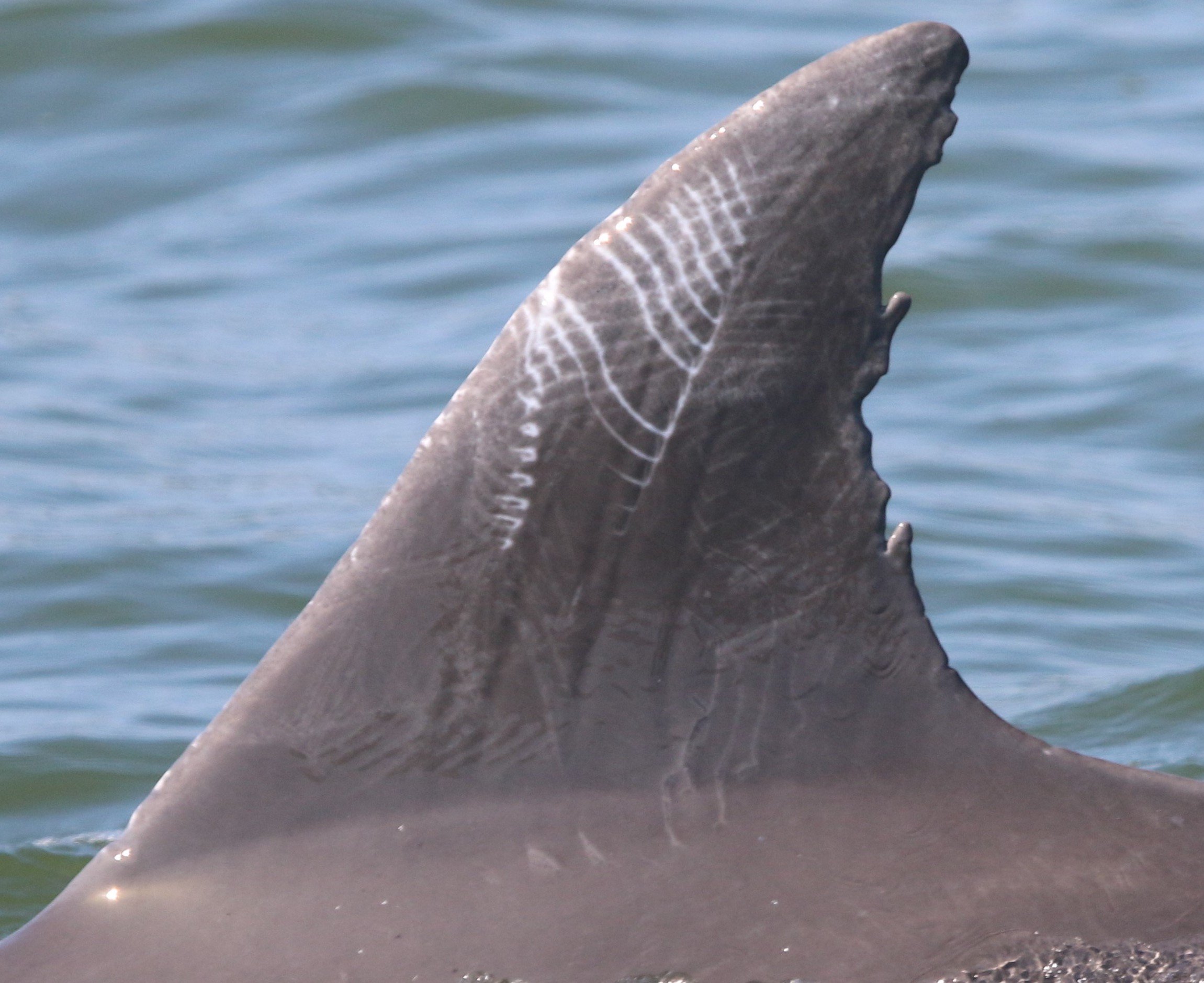
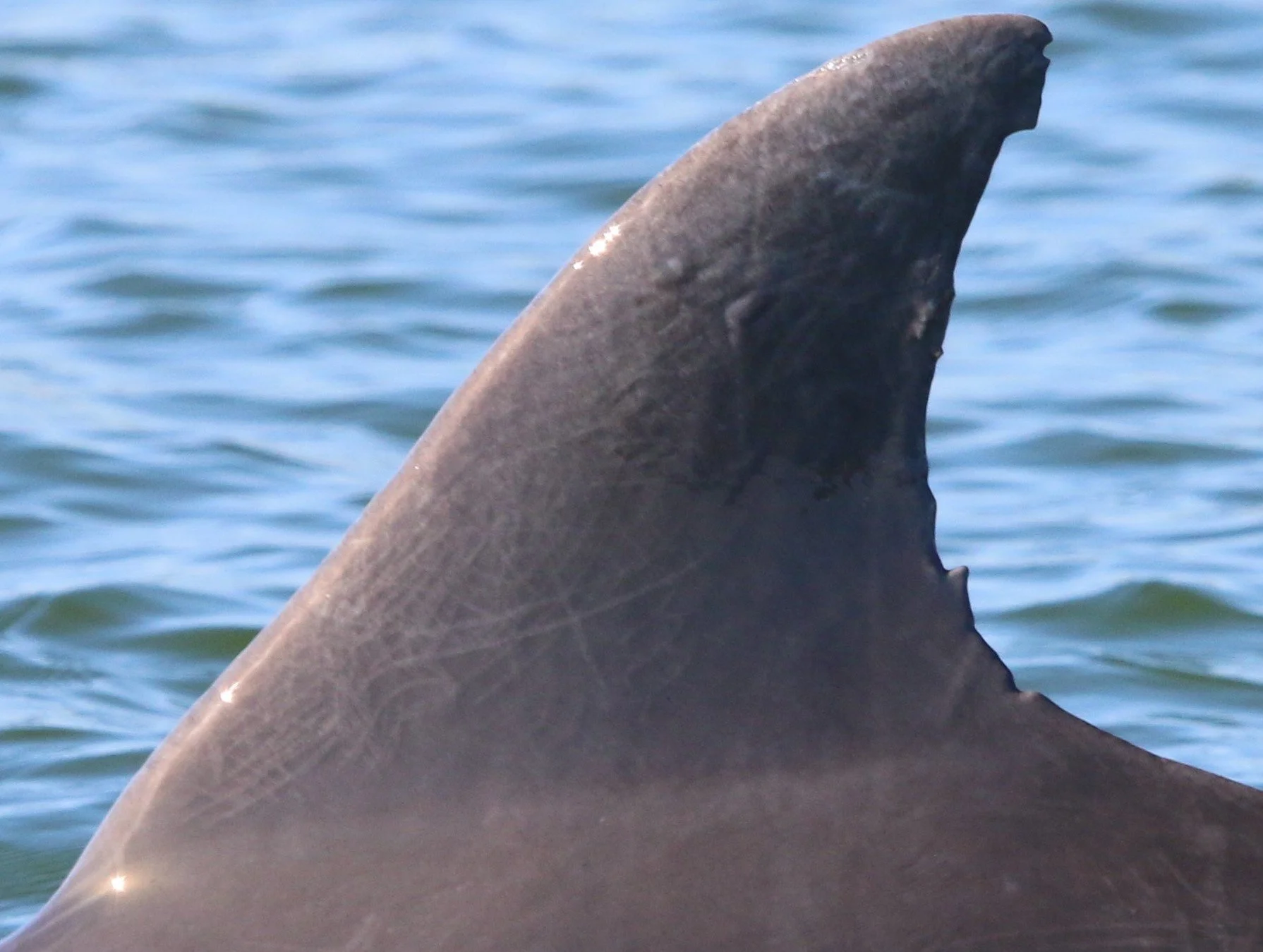
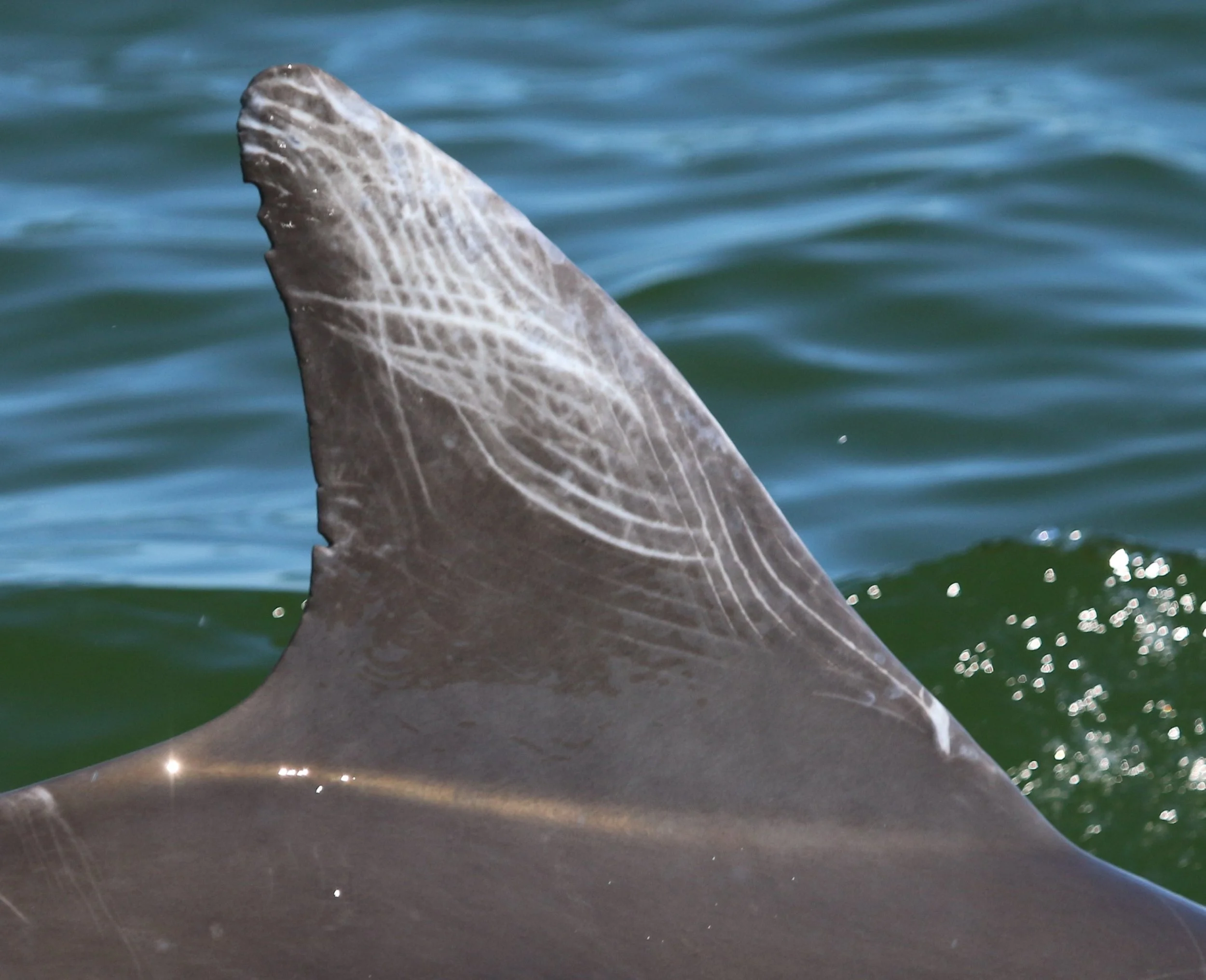
We identify dolphins based on their dorsal fins and we name them after prominent political, environmental, social figures, and activists. This image shows George Washington, Frederick Douglass, and Barbara Bush. Images by the PCDP under NOAA NMFS GA 19403.
Our work has everything to do with water quality. Everything that happens upstream, ends up downstream. Anthropogenic impacts on the dolphins include prey depletion, sound and chemical pollution, and human interaction (recreational or commercial activities). Due to their long lifespans and high trophic status, dolphins serve as vital sentinel species, providing an integrated reflection of environmental health and the presence of anthropogenic stressors. As coastal urbanization and industrial activities intensify, dolphins are increasingly exposed to legacy persistent organic pollutants (POPs), emerging per- and polyfluoroalkyl substances (PFAS), microplastics, and nutrient-rich runoff that triggers harmful algal blooms (HABs).
How does this impact the dolphins? Fat efficiently stores these toxic substances and dolphins have a wealth of blubber. Toxins accumulate from the water to phytoplankton and zooplankton, to fish, and then to dolphins. This process, called biomagnification, means dolphins end up with 10 million times what runs off into the water.
The Chesapeake Bay and Potomac River are a critical breeding area for the dolphins. Each year we see dozens of newborns, sometimes only days old. Unfortunately, when a female first gives birth, typically in her early teens, she offloads a toxic chemical cocktail in her milk, a process known as depuration. Her first-born calf is unlikely to survive as a result. But if she continues to nurse, her chemical load declines and later-born offspring are likely to survive. Males have no way to offload the bioaccumulation of toxins and this is one reason why they have shorter lives than females.
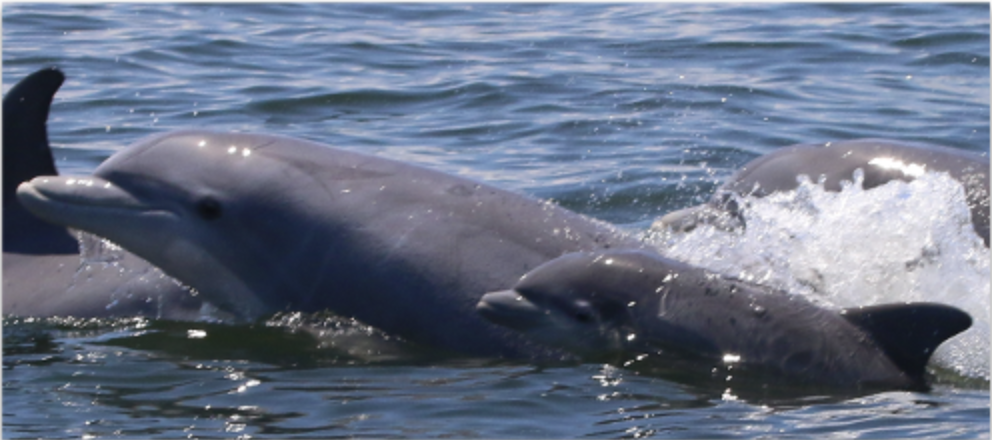
Image of mother with her newborn dolphin. Potomac-Chesapeake Dolphin Project. Image taken under NMFS GA 19403.
The population we study is recovering from a devastating epidemic of morbillivirus (akin to measles) which killed thousands of bottlenose dolphins, depleting the population by at least 40%. The epidemic, which lasted from 2013 to 2015 inspired the establishment of the Potomac-Chesapeake Dolphin Project so we can better understand (1) the ecology, social structure and dynamics of the population; (2) the pattern of the epidemic (which dolphins were infected and why) so that future risks can be mitigated; (3) other risks the dolphins face; (4) how much of the Potomac River dolphins have used historically and in the present day; and (5) if the population recovering. Water quality remains a central issue since it impacts the dolphin’s prey, their health and vulnerability to disease.
To support the continued health of this dolphin population you can follow the research and conservation efforts of the Potomac-Chesapeake Dolphin Project , provide financial support to the research team or submit a dolphin sighting.
Dr. Janet Mann has studied dolphins for decades and more recently founded The Potomac-Chesapeake Dolphin Project.