

Seasonality and Distribution
The PCDP has recorded nearly 600 group sightings of dolphins of over 2000 dolphins in the past 10 years, with most sightings occurring from June through August when water temperatures are warmest (Jacoby 2025).
Using both boat-based observations and hydrophones, the PCDP has documented dolphins from the middle of the Chesapeake Bay to 45 miles up the Potomac River near Colonial Beach, VA, spanning waters up to 143 feet deep and 4.7 miles from shore (Jacoby 2025).

This map shows every sighting of dolphins by PCDP from 2015-2025 in blue and sightings reported by members of the community in pink. If you click on the photo or this link, you can explore the sightings!
Behavior and Ecology
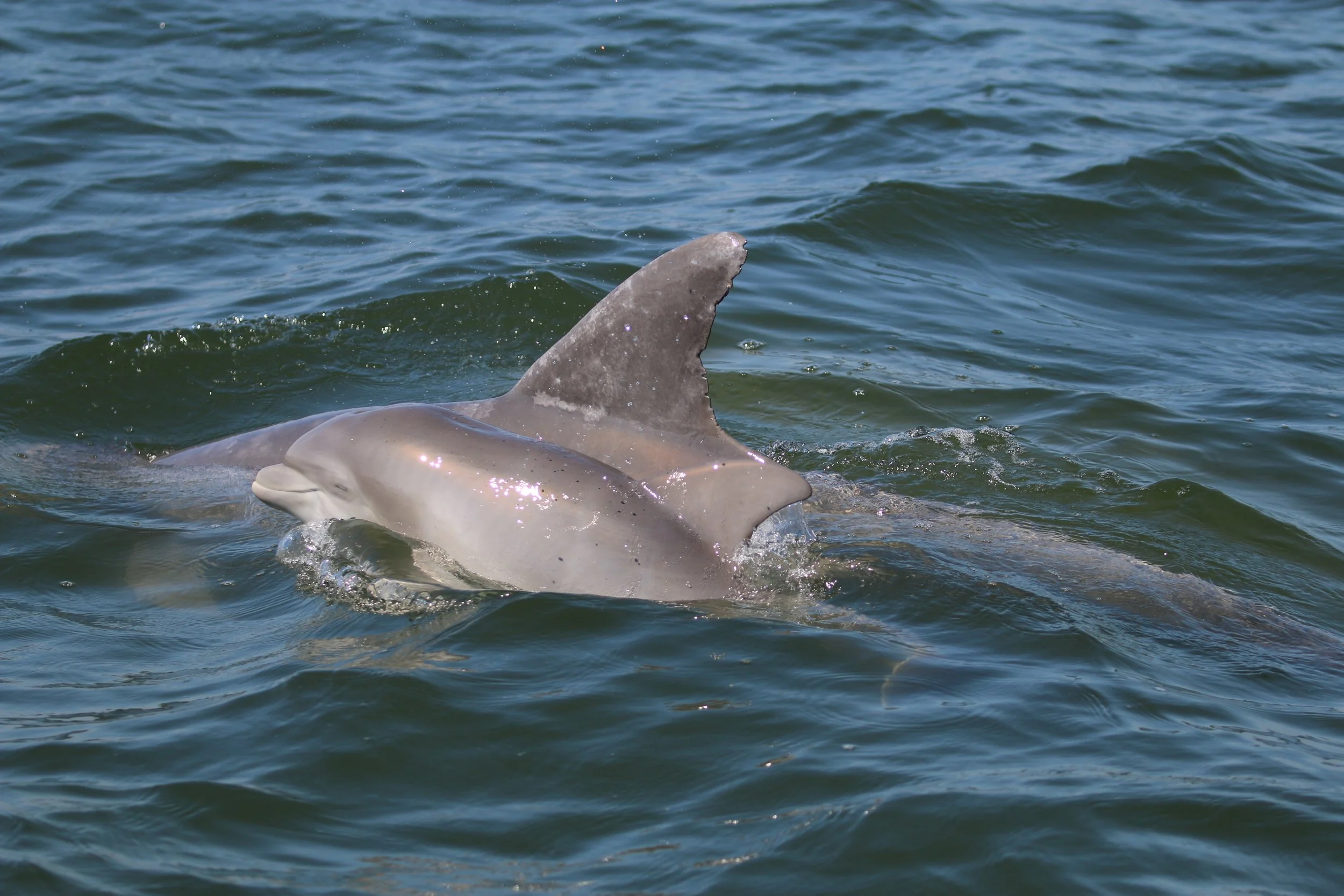
Taken under NOAA NMFS General Authorization No.19403 and 23782
The PCDP has observed dolphins mostly traveling, followed by foraging, socializing, and resting. Dolphins in the area feed on several fish species, including spot and weakfish, which are known to be a favorite of dolphins in the Mid-Atlantic region. The PCDP has also documented mating behaviors and even a birth, indicating the area’s importance for both breeding and birthing (Jacoby 2025).
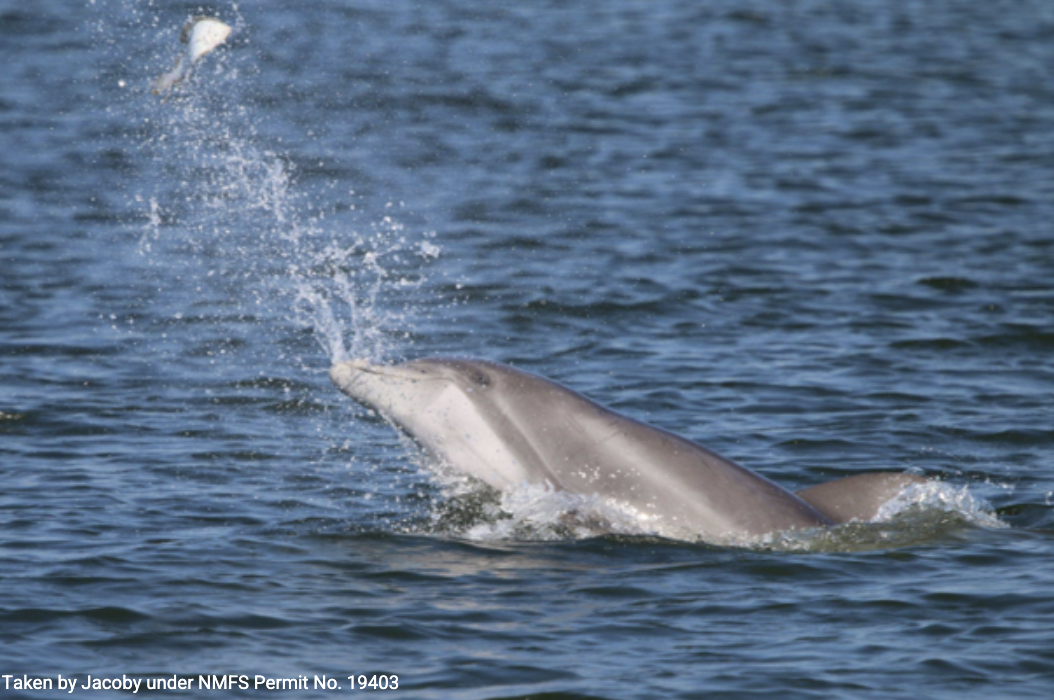
Taken under NOAA NMFS General Authorization No.19403 and 23782
While it is not uncommon for the PCDP to see a lone dolphin, the group sizes average around 26 and can get as large as 260 (Jacoby 2025)! This is much larger than other areas along the U.S., like Sarasota, FL, where average group sizes are approximately 7. The PCDP is currently investigating the social structure and long-term associations of these dolphin groups.
Population Dynamics
Abundance and Site Fidelity
During sightings, the PCDP photographs the dorsal fin of every dolphin in the group. The unique shape and markings of an individual’s fin allows the PCDP to keep track of individuals within and across years. To date, >2000 dolphins have been recorded in the Potomac River-Chesapeake Bay and 21% return year after year (Jacoby 2025).
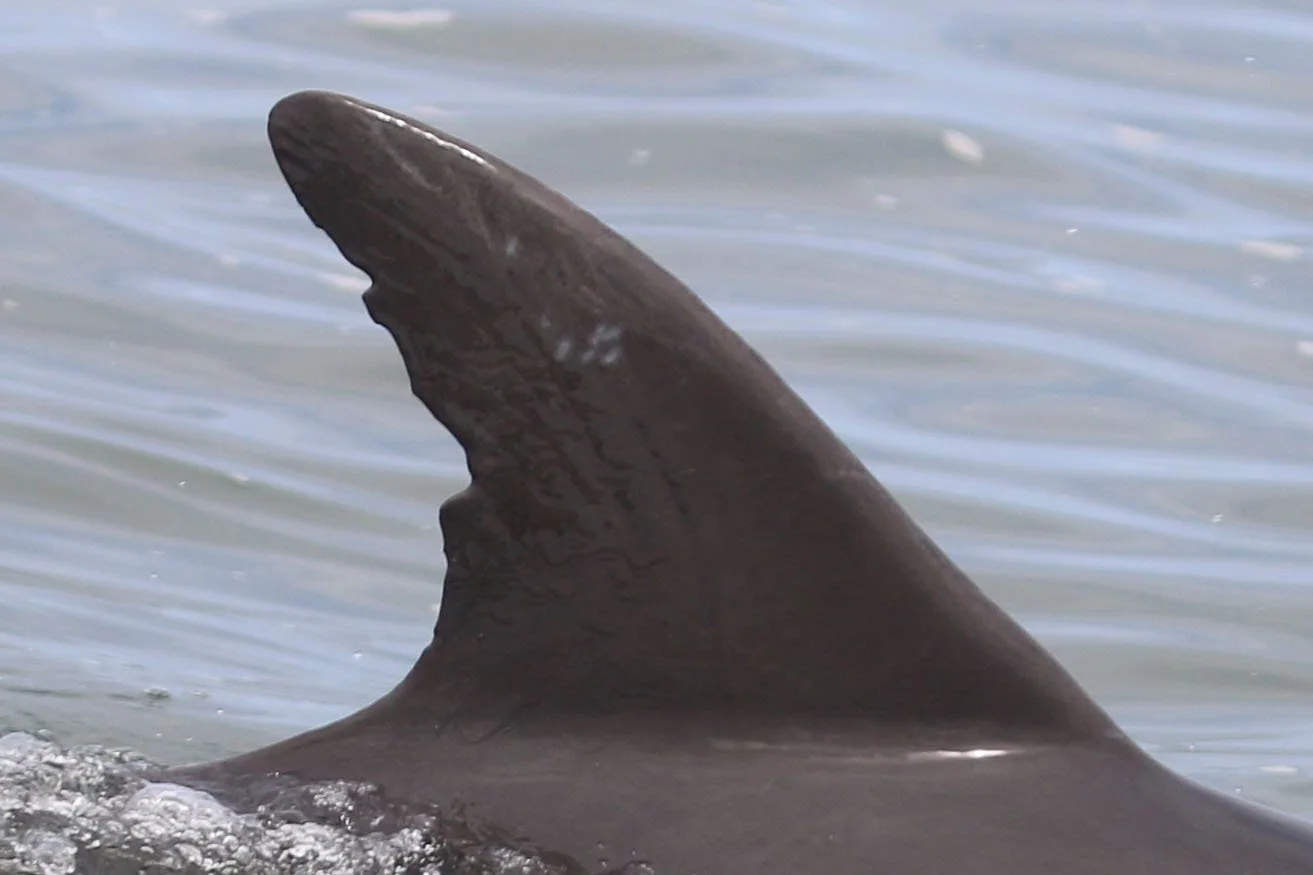
Bill Clinton in 2025
Photo taken by Verena Conkin in 2025 under NOAA NMFS info should be: under NOAA NMFS General Authorization No. 19403 and 23782
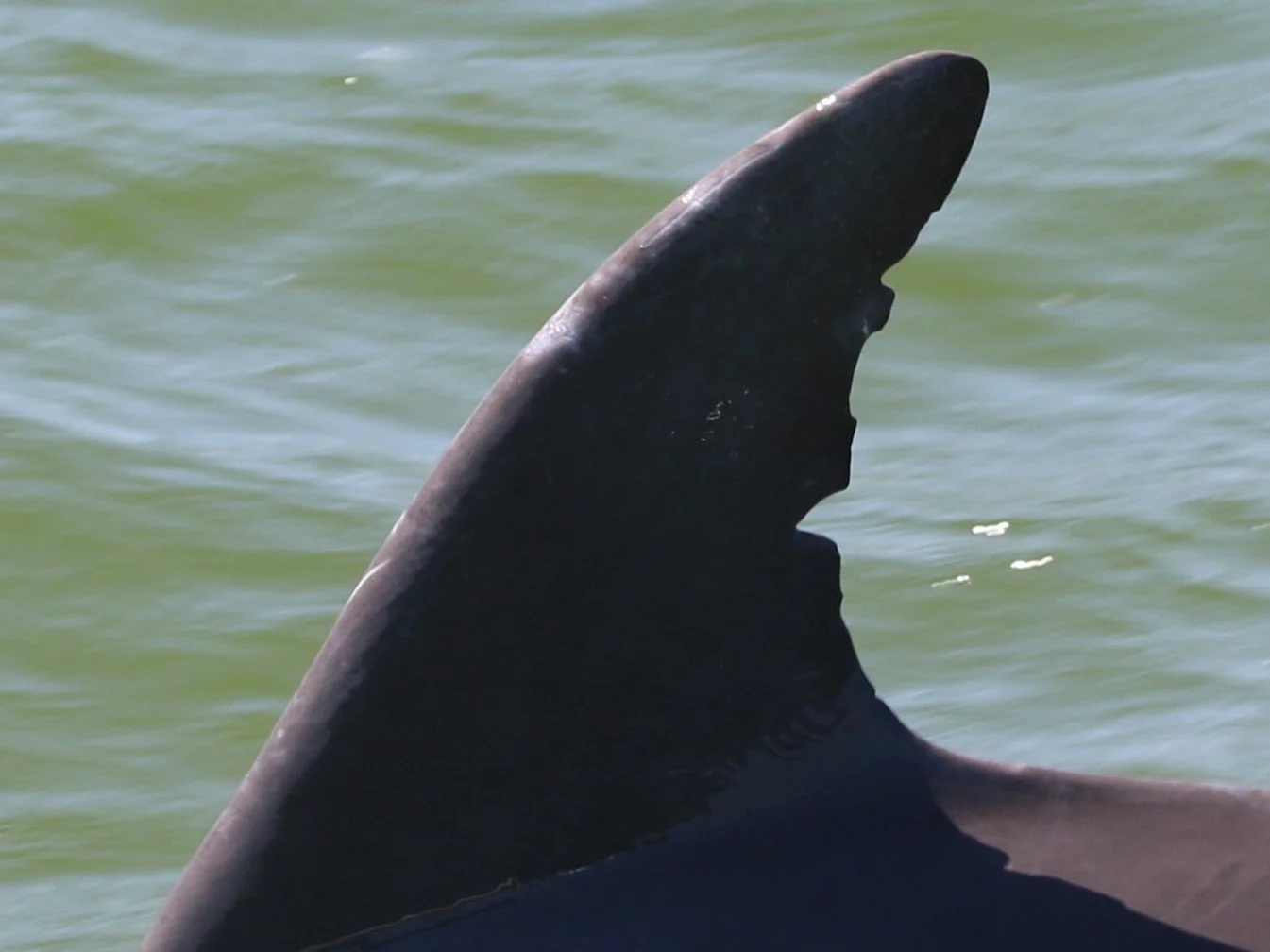
Bill Clinton in 2015
Photo taken by Eric Patterson under NOAA NMFS info should be: under NOAA NMFS General Authorization No. 19403 and 23782
In the above images, Photo ID allowed us to track this dolphin over 10 years!
Demography
Knowing the demographic structure of a population is necessary for responding to threats and developing management strategies.
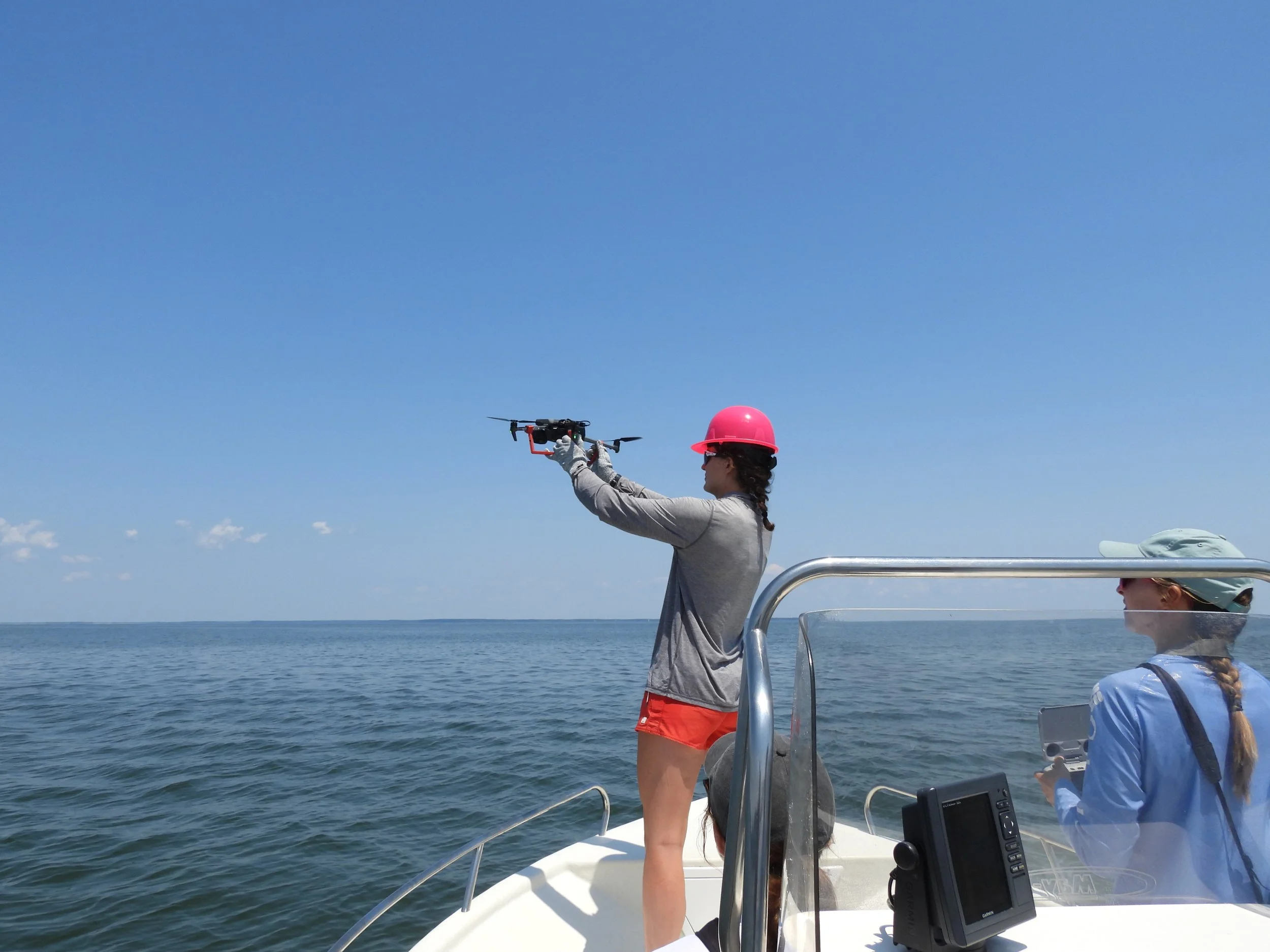
Shea O’Day (Georgetown ‘26) and Verena Conkin flying the drone during the 2024 field season
Reproductive females are especially important because they are key indicators of a population’s overall health. To date, the PCDP has identified >300 mothers and 400 calves, with most births occurring between May and June (Jacoby 2025). The PCDP is currently investigating female reproductive histories, stages of calf development, and aggression towards calves in early life.
Using Unoccupied Aerial Systems (UAS or “drones”), PCDP is able to obtain a more complete picture of demographic structure by measuring the body size of individuals from aerial images and inferring their age (calf, juvenile, or adult) and sex.
Drones also provide valuable data on behavior and individual characteristics since many behaviors and interactions happening just below the surface are not visible from any other perspective.
Taken under NOAA NMFS General Authorization No.19403 and 23782
Population Structure
In the absence of genetic data, patterns in residency and seasonal movements are used to distinguish Mid-Atlantic bottlenose dolphin populations from one another by the National Marine Fisheries Service. Dolphins are federally protected under the Marine Mammal Protection Act of 1972 and monitored to ensure sustainable population levels and a functioning ecosystem role.
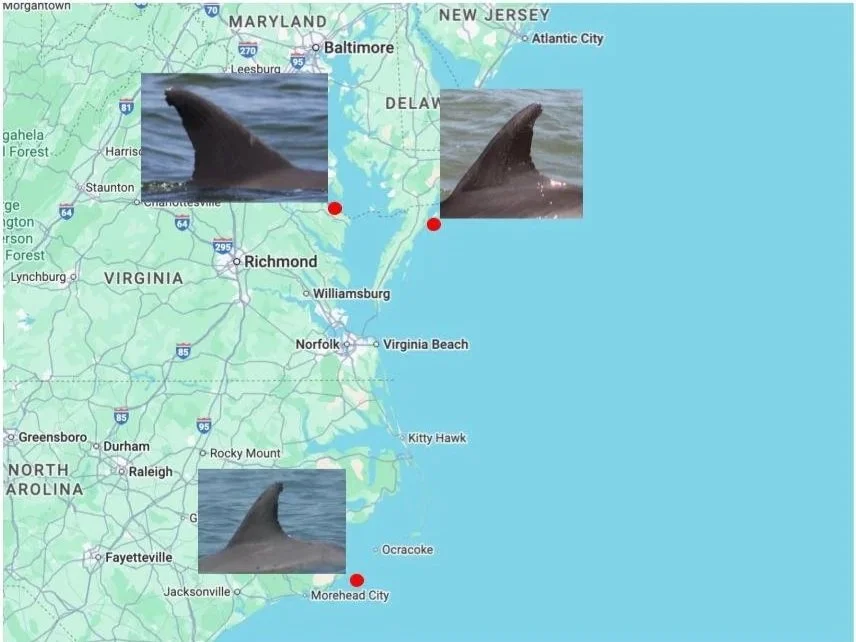
James Madison, spotted in the Potomac July 2015 and 2019 (taken under GA 19403 and 23782), was also spotted off of Beaufort/Shackelford Banks, NC March 2006 (photo taken under Read GA 808-1798) and April 2009 (Keith Rittmaster NCMM). This dolphin was also spotted off of Chincoteague, VA in July 2023
The PCDP collaborates with other researchers through a Photo-ID consortium called the Mid-Atlantic Bottlenose Dolphin Catalog to track dolphins across time and space and provide greater insight into their population structure for improved conservation.
Dolphins observed in the Potomac have been sighted in coastal waters from the Southern Outer Banks of North Carolina to Cape May, New Jersey, supporting the presence of three estuarine and migratory coastal populations. The PCDP also has evidence for a fourth, previously unrecognized population that remains in the Chesapeake Bay and adjacent Virginia coastal waters year-round (Jacoby 2025).
Health
Disease Risk and Spread

Figure 3. Collier et al., 2023.
Top Left: The average number of synchronous breathing contacts for adult male, adult female and juvenile dolphins based on our data collection.
Bottom Left: A mixing matrix that shows the proportion of synchronized breaths that we observed between each demographic group. We found that dolphins tend to "sync" most with dolphins of their own age/sex class.
Right: A contact network that uses these findings to demonstrate how dolphins are connected based on their synchronized breathing patterns. Circles represent dolphins and lines between them represent a synchronized breathing interaction. We show an example of an individual's (large circles) synchrony network for each demographic group (isolated to the right of the network) to highlight the differences in contact among age and sex. We can use this network to simulate how disease can spread in PCDP dolphins.
After the 2013-2015 Unusual Mortality Event, the PCDP focused on discovering how morbillivirus, a highly pathogenic disease related to measles, spreads among these dolphins and which dolphins are more at risk of contracting and spreading the disease.
The PCDP’s research found that juveniles (4-10 years of age) and adult males have high rates of synchronous breathing contact (breathing together at the surface, suggesting ahigher risk for contracting and spreading morbillivirus via respiratory vapor or ‘blow’, compared to adult females and calves (Collier et al., 2025).These findings are consistent with the National Marine Fisheries Service stranding data.
In collaboration with the National Oceanic and Atmospheric Administration (NOAA) and other research teams, the PCDP’s research projected high-risk regions and seasons for future disease outbreaks along the Atlantic coast. The PCDP’s work highlights that the northern spring migration and breeding season are particularly susceptible periods when dolphins congregate at higher rates.
Skin Disease and Ectoparasites
Skin lesions are often indicators of environmental stressors such as poor water quality or disease. We trained a machine learning model to automate the process of skin lesion detection in photographs. With this model, we’ve found that the Potomac dolphins have a high prevalence of skin lesions (Murphy et al. 2025a) and they correlate with temperature and salinity (Murphy et al. 2025b).
Parasitic stem barnacles, called Xenobalanus globicipitis, attach to dolphins, particularly those belonging to coastal migratory populations. Using photographs of dolphins sighted in the Potomac, the PCDP assessed barnacle attachment location and found that barnacle attachment is determined by both body temperature and hydrodynamics (Dolezal et al. 2023).
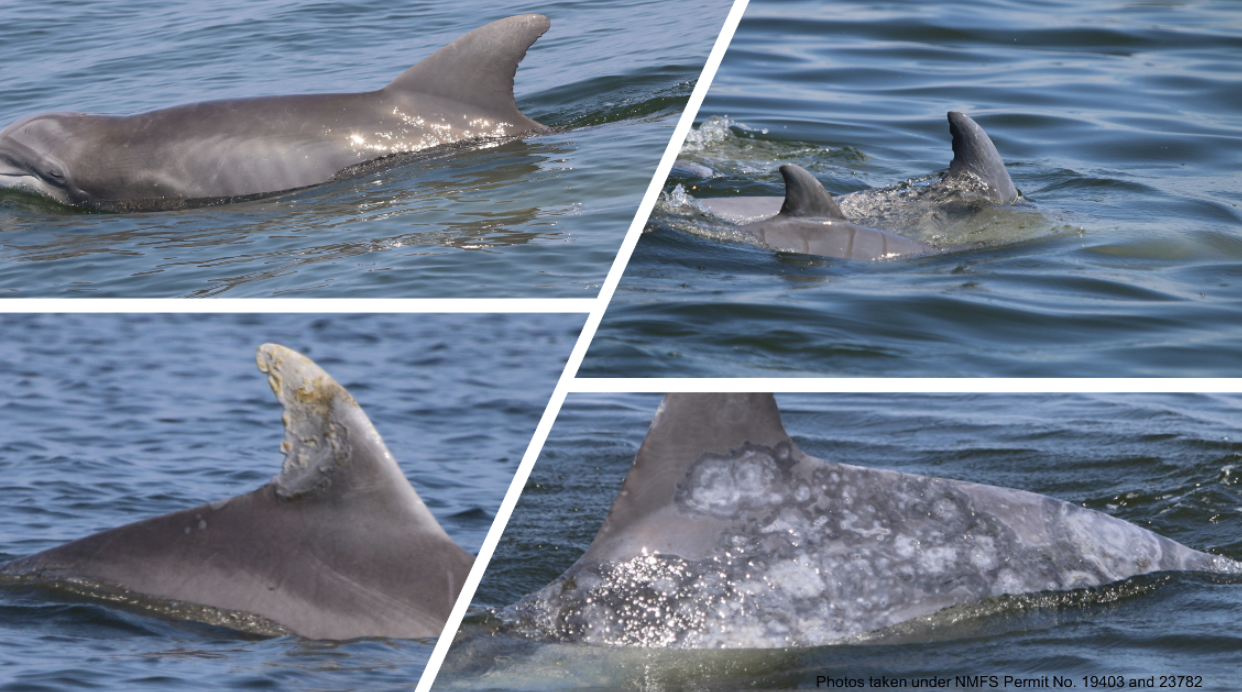
Top Row from left: skinny dolphin, calf with skin discoloration
Bottom Row: dolphins with skin lesions
Taken under NOAA NMFS General Authorization No.19403 and 23782
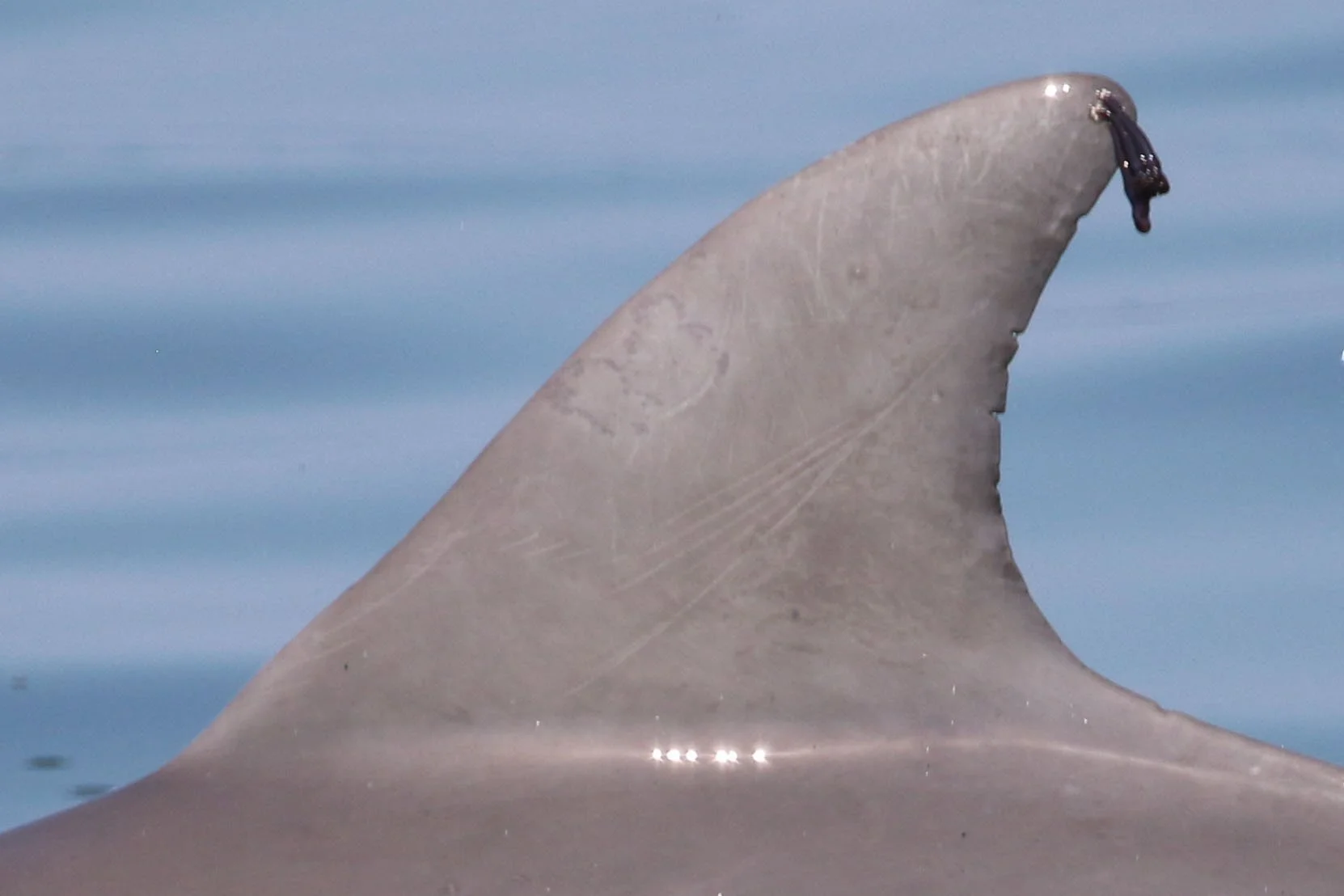
Dolphin with Xenobalanus globicipitis
Taken under NOAA NMFS General Authorization No.19403 and 23782
Other Impacts
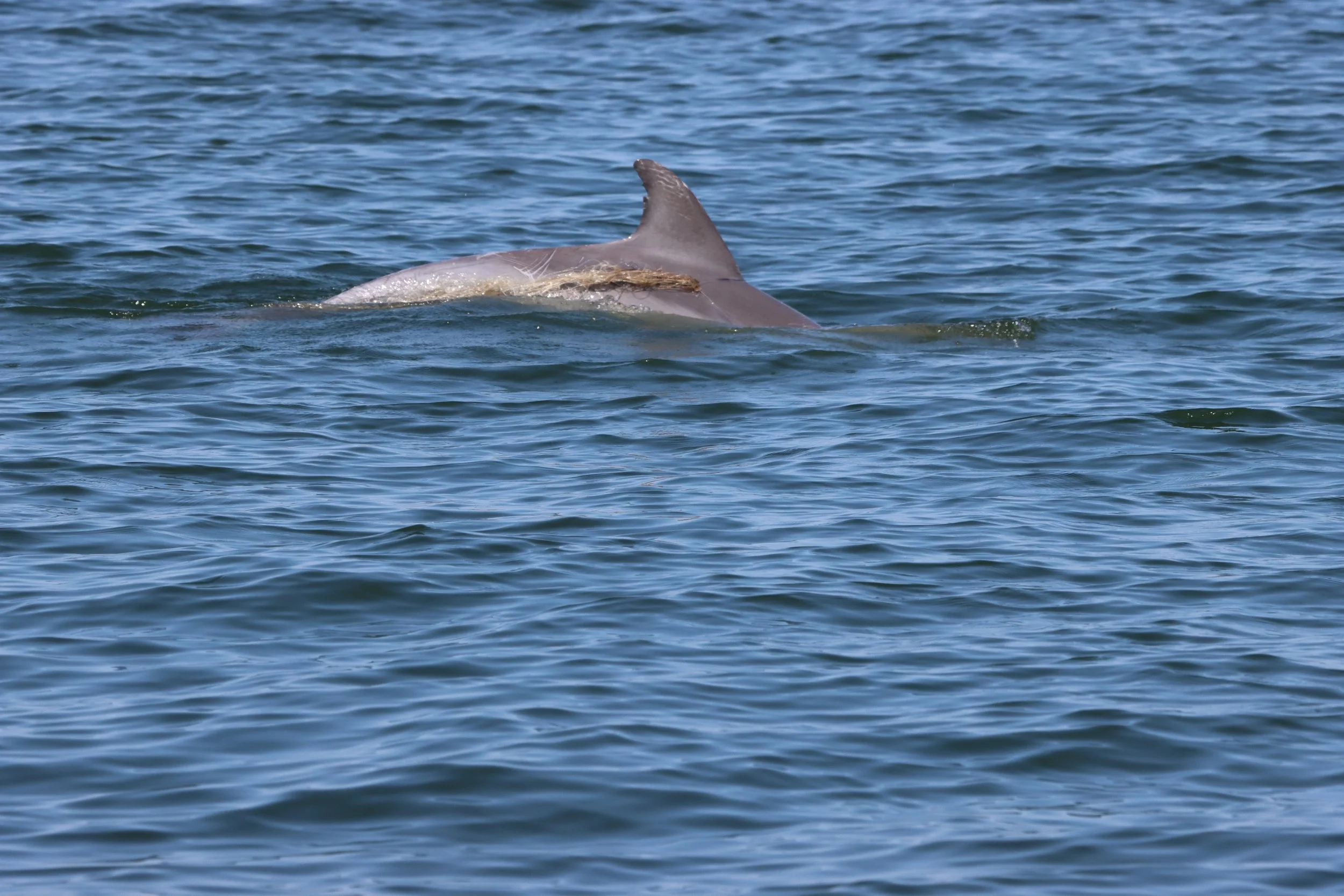
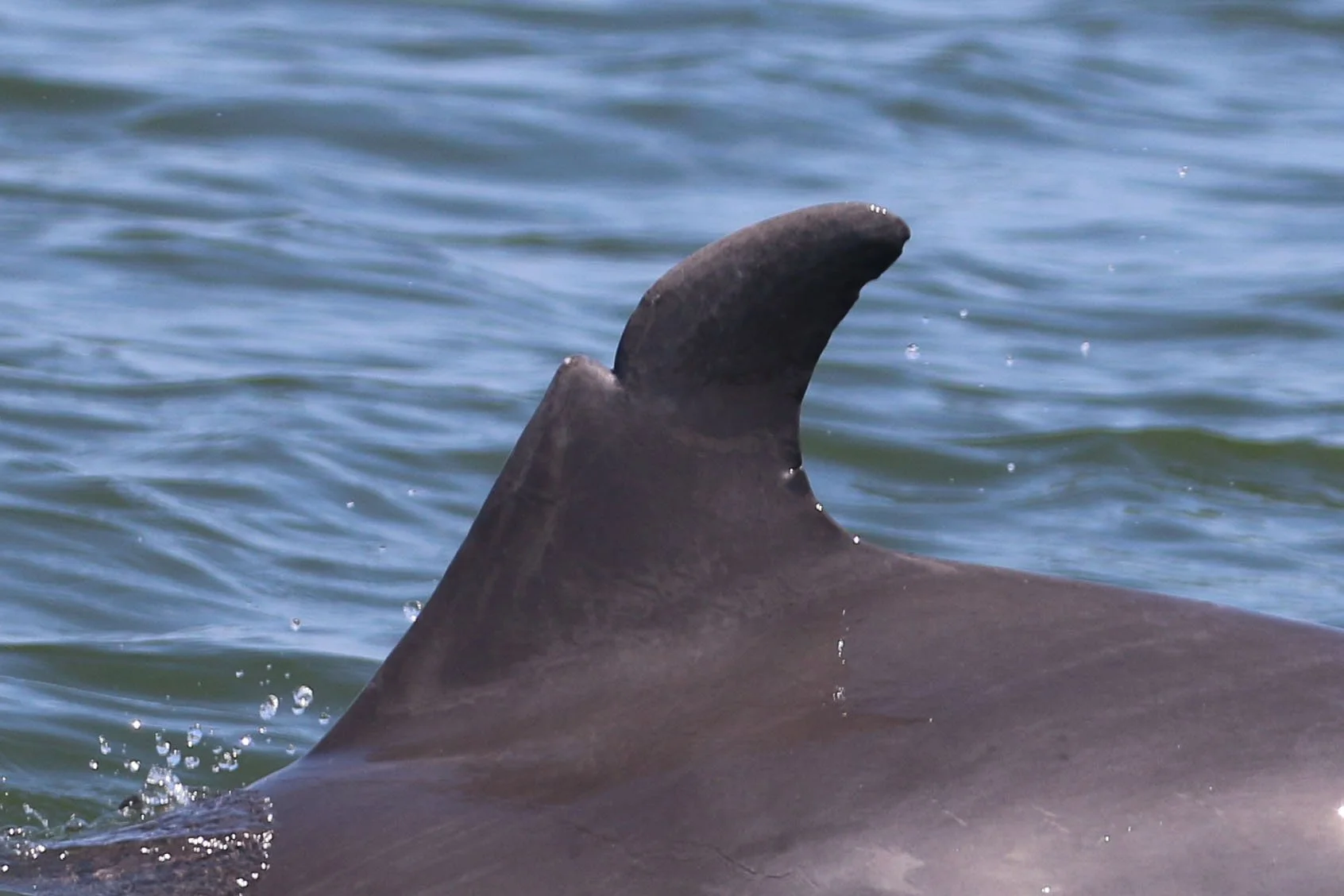
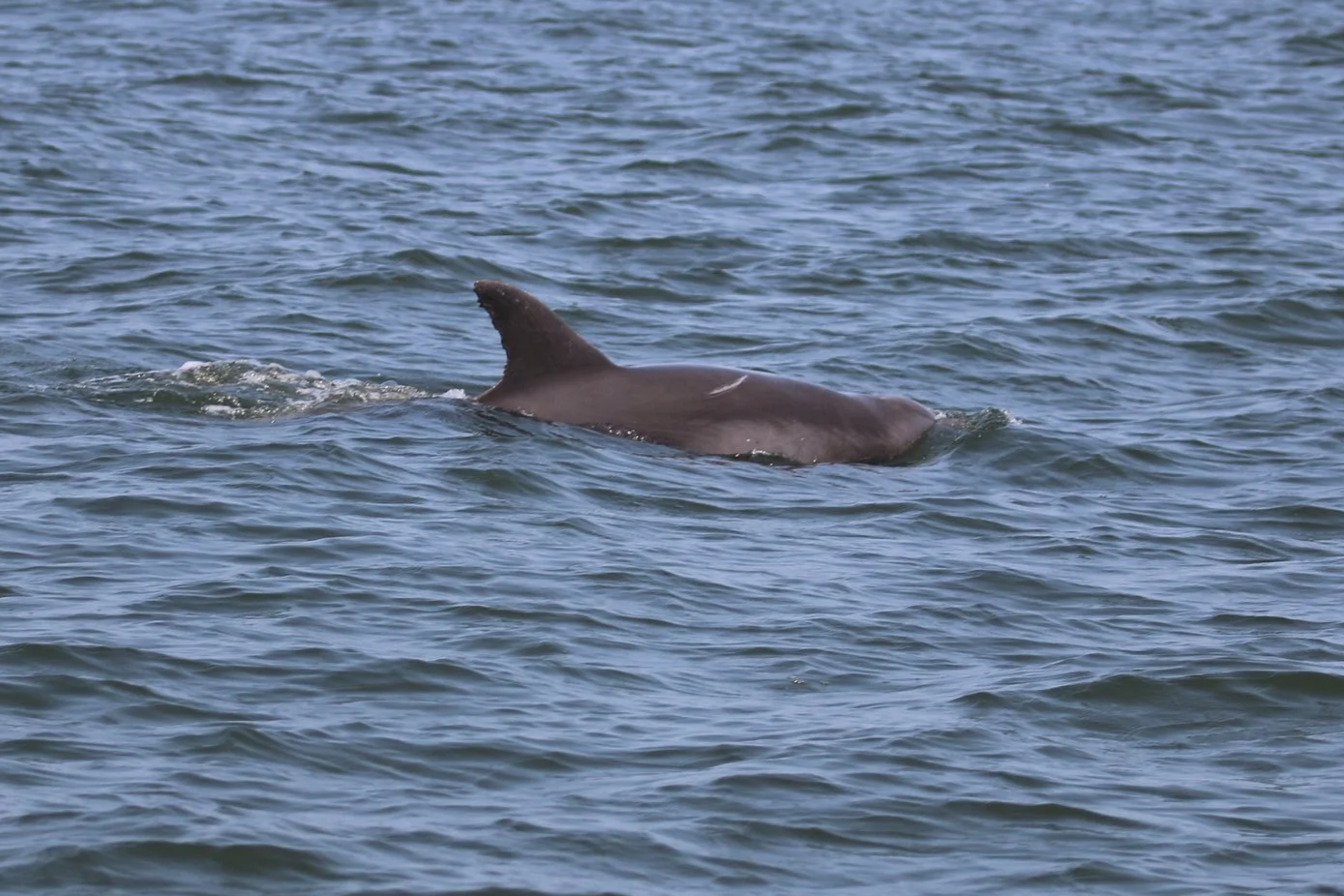
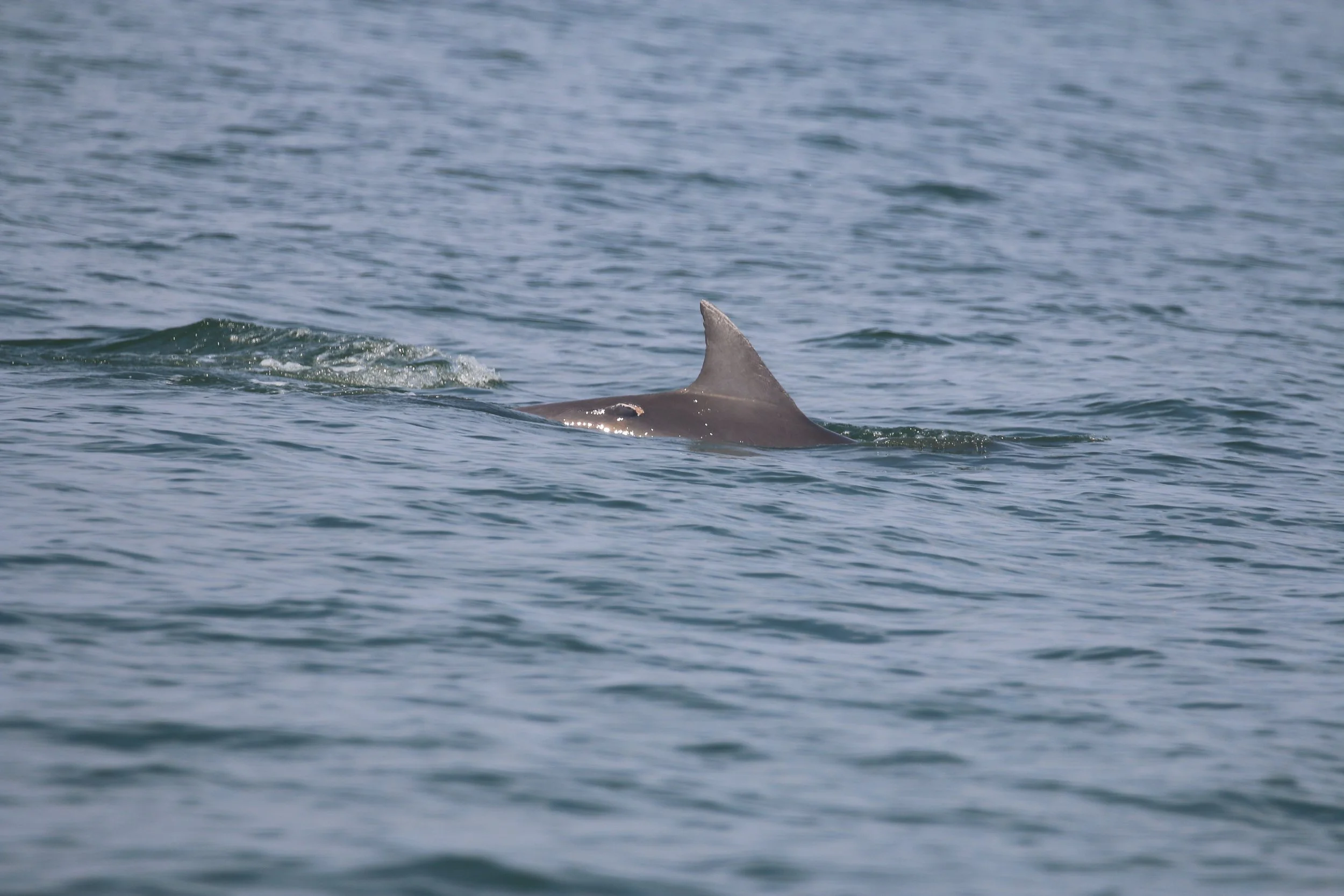
In addition to disease risk and spread, the PCDP also monitors the physical condition of the dolphins (emaciation) and other threats that include sharks, boat strikes, fishing gear entanglement, and water quality testing in collaboration with the Georgetown Chemistry Department (copper, cadmium, and lead are known to be harmful to dolphins).
Taken under NOAA NMFS General Authorization No.19403 and 23782
In our conservation research, we found that individual dolphins can garner empathy and support (Smith et al. 2024), which can inform policymakers and efforts to protect the dolphins and their habitats.
If you see dolphins and want to make a difference, you can report your dolphin sightings directly to us at this survey!
You can protect these dolphins by directly reporting distressed, harmed, or dead dolphins to the Marine Mammal Stranding Response Network at (757) 385 - 7575 in Virginia or 1-800-628-9944 in Maryland.
You can also directly impact them by following the National Marine Fisheries Service boating safety guidelines which can be found here.
Historical Presence
Through synthesis of newspaper records and local ecological knowledge (LEK) from watermen and charter fishermen, the PCDP found that dolphins have been present in the Potomac River every decade since the 1830s (Jacoby 2025). This debunks a longstanding narrative (circa 1923) that dolphins were extirpated from the Potomac River and have only recently returned due to climate change or Bay-wide restoration efforts. However, this study revealed that they have been extirpated from the upper reaches of the tidal Potomac River, like the Alexandria Harbor, Virginia, since the 1930s (Jacoby 2025).