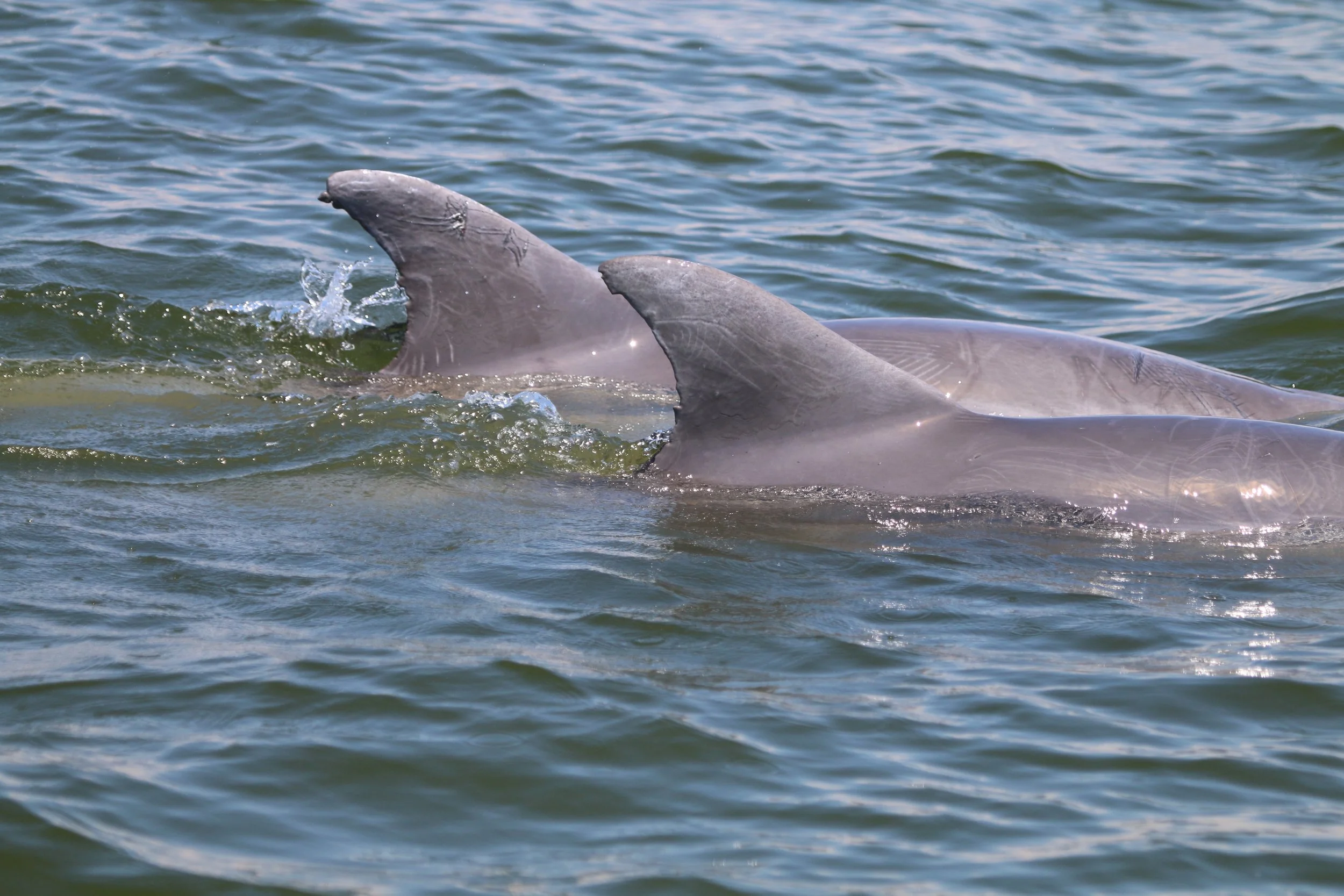
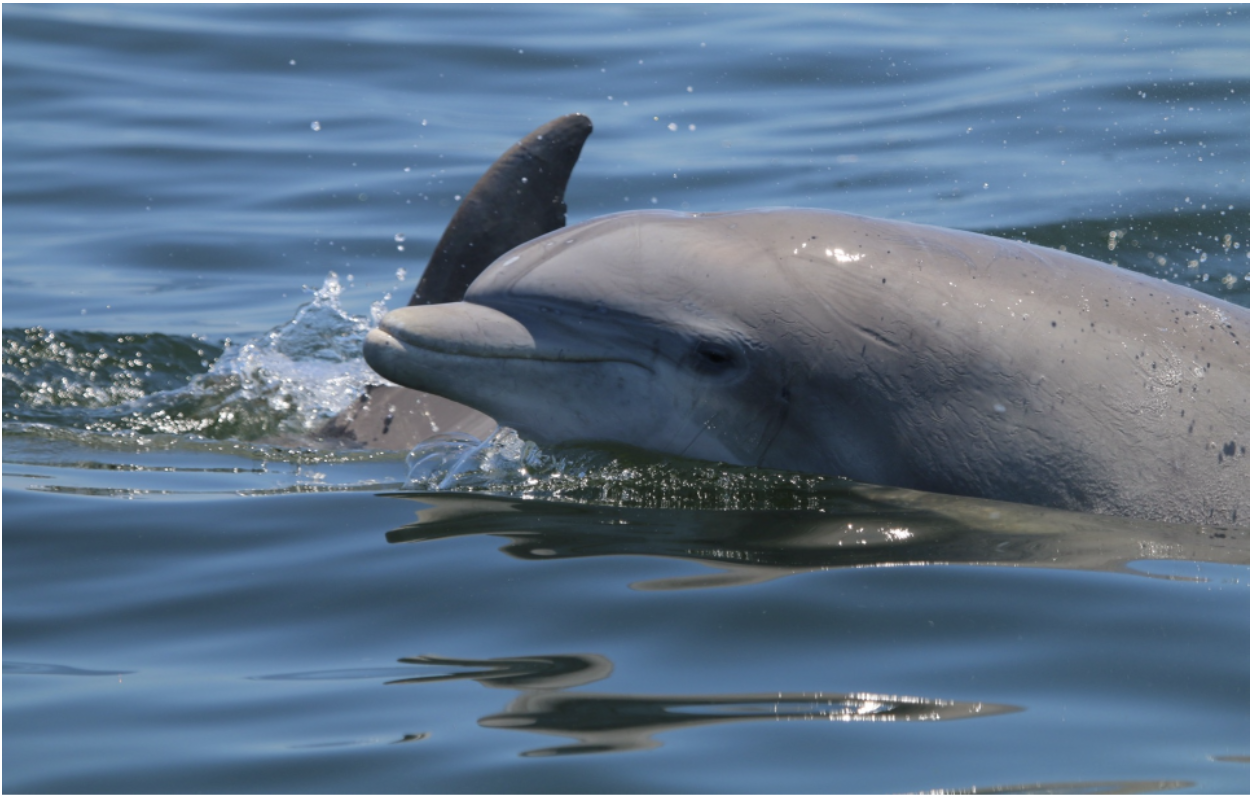
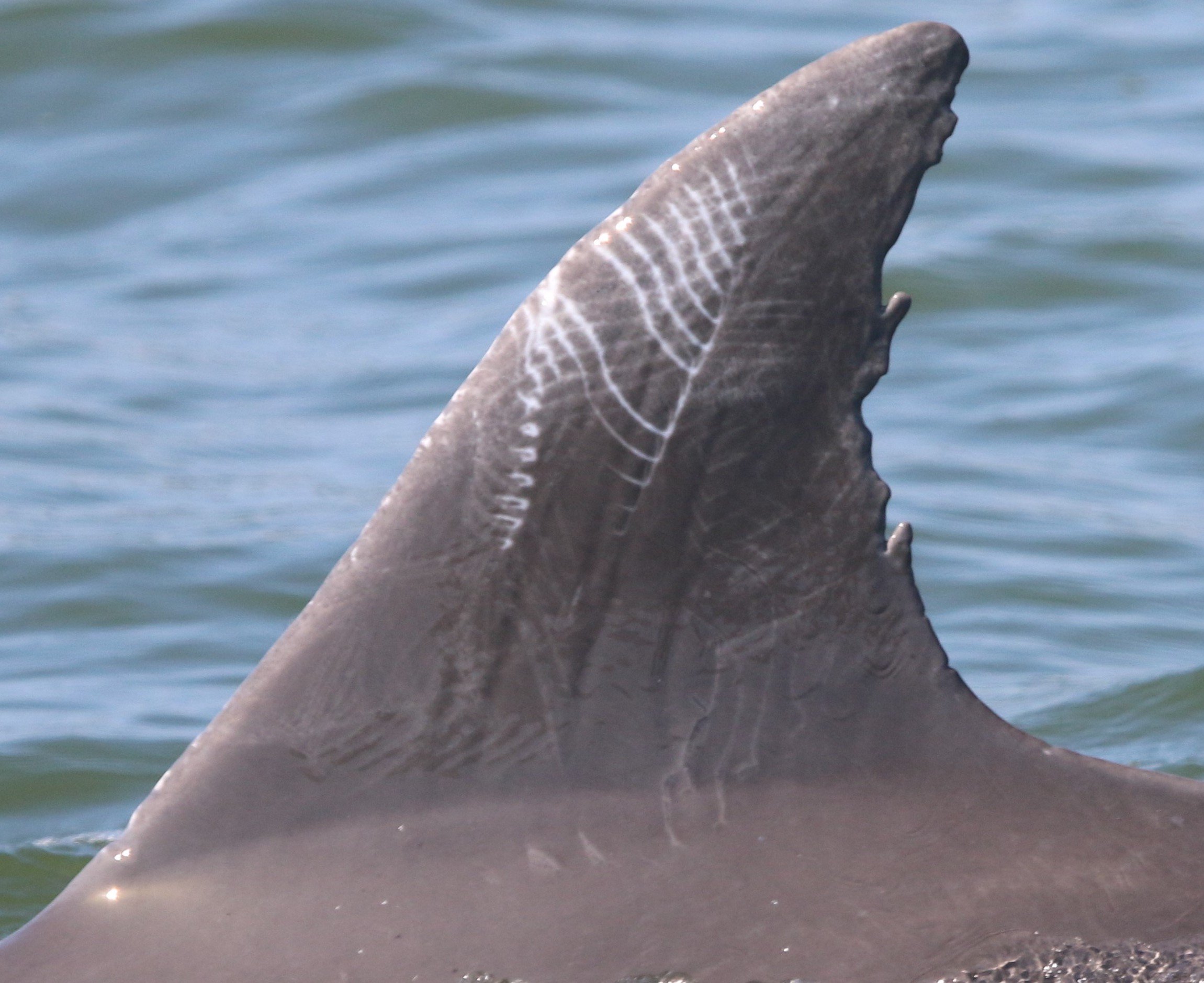
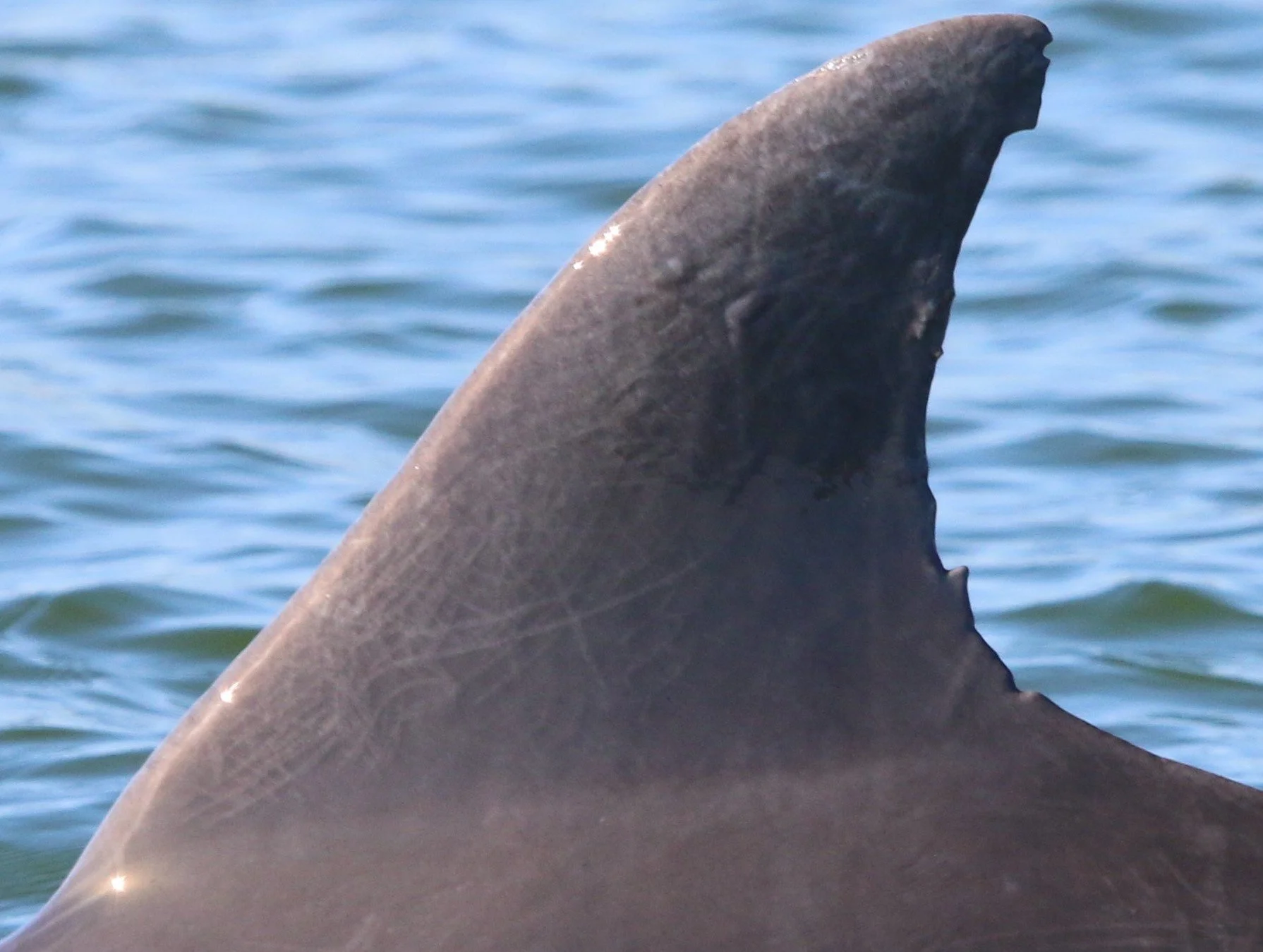
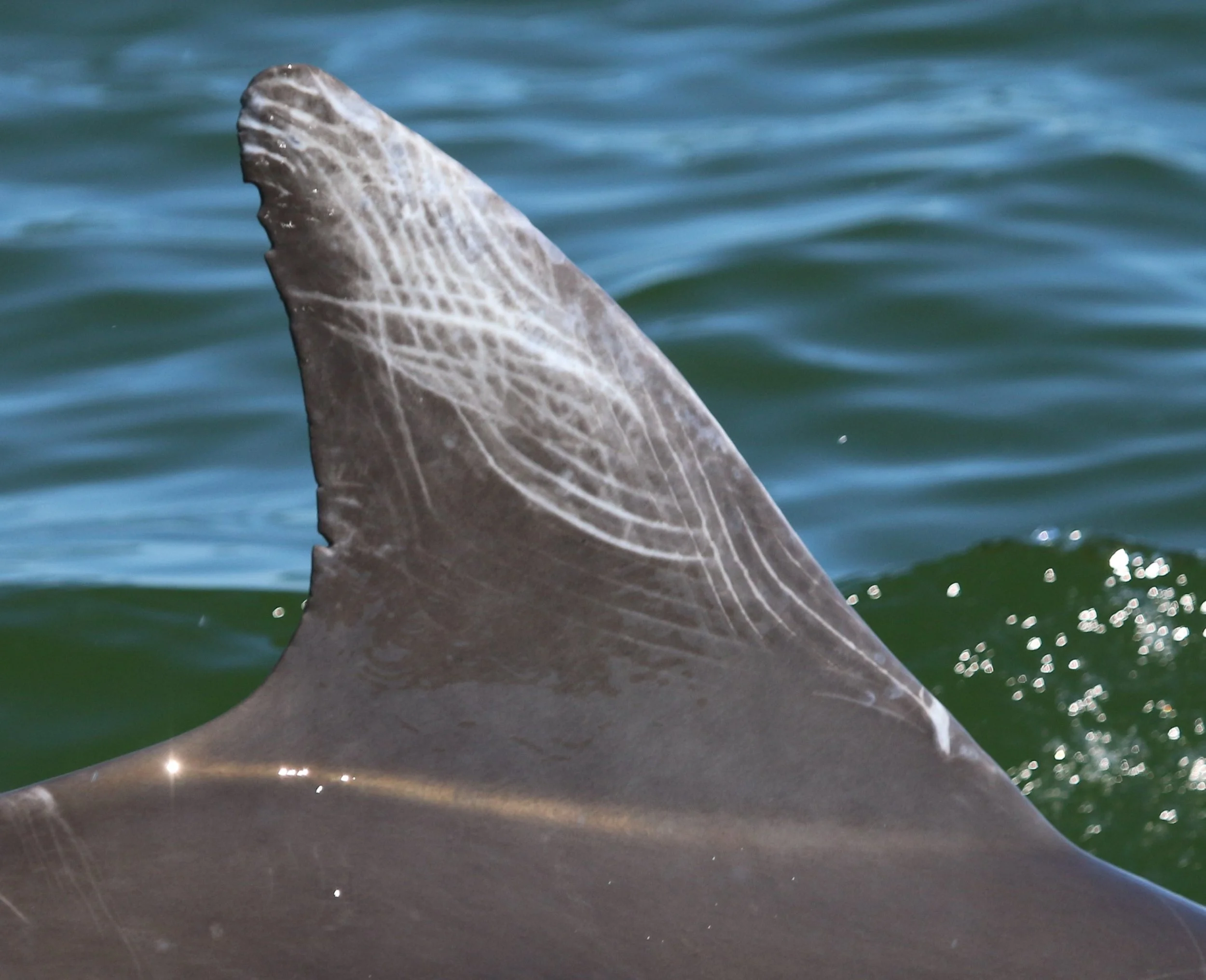
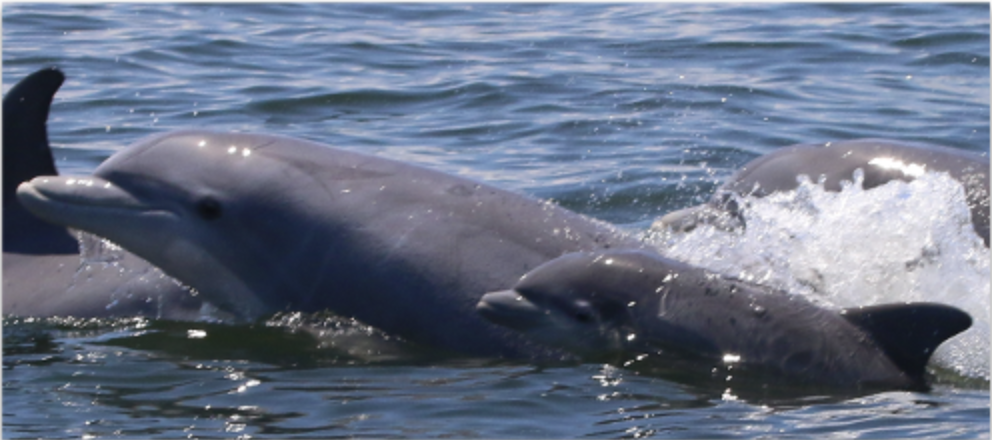
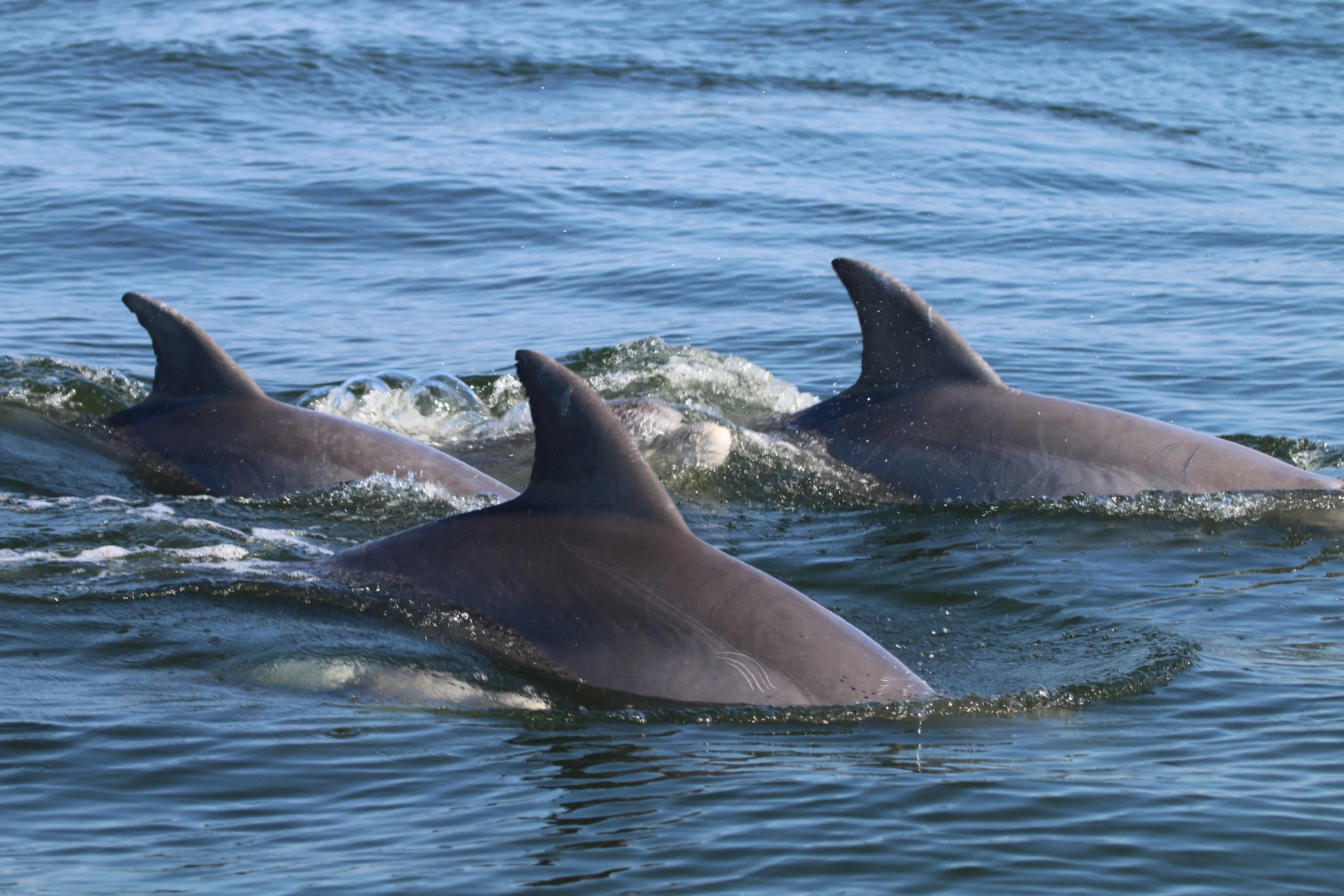
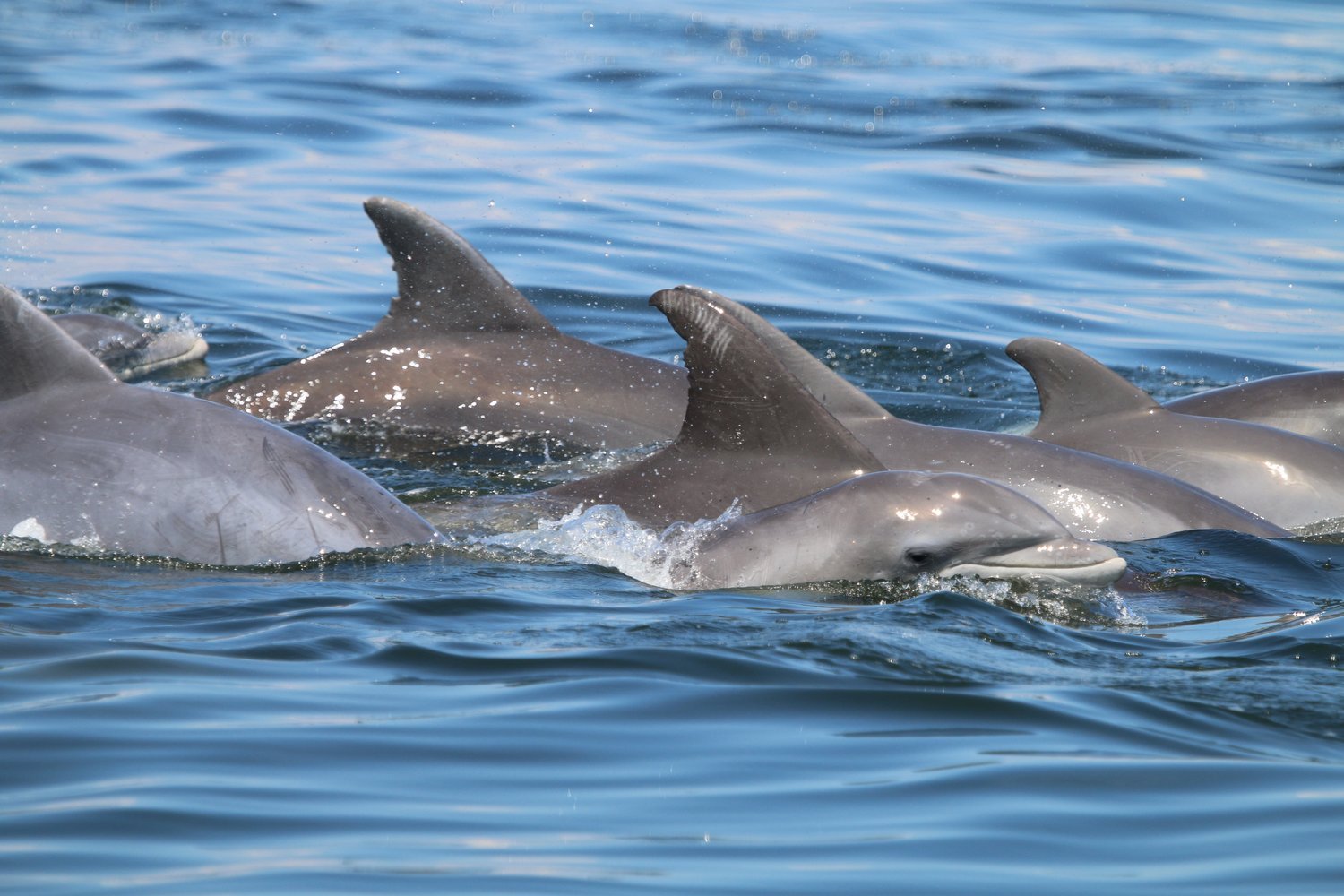
We identify dolphins based on their dorsal fins and we name them after prominent political, environmental, social figures, and activists. This image shows George Washington, Frederick Douglass, and Barbara Bush. Images by the PCDP under NOAA NMFS GA 19403.
Our work has everything to do with water quality. Everything that happens upstream, ends up downstream. Anthropogenic impacts on the dolphins include prey depletion, sound and chemical pollution, and human interaction (recreational or commercial activities). Due to their long lifespans and high trophic status, dolphins serve as vital sentinel species, providing an integrated reflection of environmental health and the presence of anthropogenic stressors. As coastal urbanization and industrial activities intensify, dolphins are increasingly exposed to legacy persistent organic pollutants (POPs), emerging per- and polyfluoroalkyl substances (PFAS), microplastics, and nutrient-rich runoff that triggers harmful algal blooms (HABs).
How does this impact the dolphins? Fat efficiently stores these toxic substances and dolphins have a wealth of blubber. Toxins accumulate from the water to phytoplankton and zooplankton, to fish, and then to dolphins. This process, called biomagnification, means dolphins end up with 10 million times what runs off into the water.
The Chesapeake Bay and Potomac River are a critical breeding area for the dolphins. Each year we see dozens of newborns, sometimes only days old. Unfortunately, when a female first gives birth, typically in her early teens, she offloads a toxic chemical cocktail in her milk, a process known as depuration. Her first-born calf is unlikely to survive as a result. But if she continues to nurse, her chemical load declines and later-born offspring are likely to survive. Males have no way to offload the bioaccumulation of toxins and this is one reason why they have shorter lives than females.